
Looking for a Handheld Badge Reader for Access Control? This blog outlines the different types of products available and what to consider when choosing a solution.
What is mobile access control?
At Telaeris, the term “Mobile Access Control” refers to the use of a handheld badge reader to verify credentials and access permissions according to the rules in an access control system database. “Mobile Access Control” may also refer to mobile credentials, which are not the focus of this blog (though a mobile badge reader should be able to read those credentials as well!).
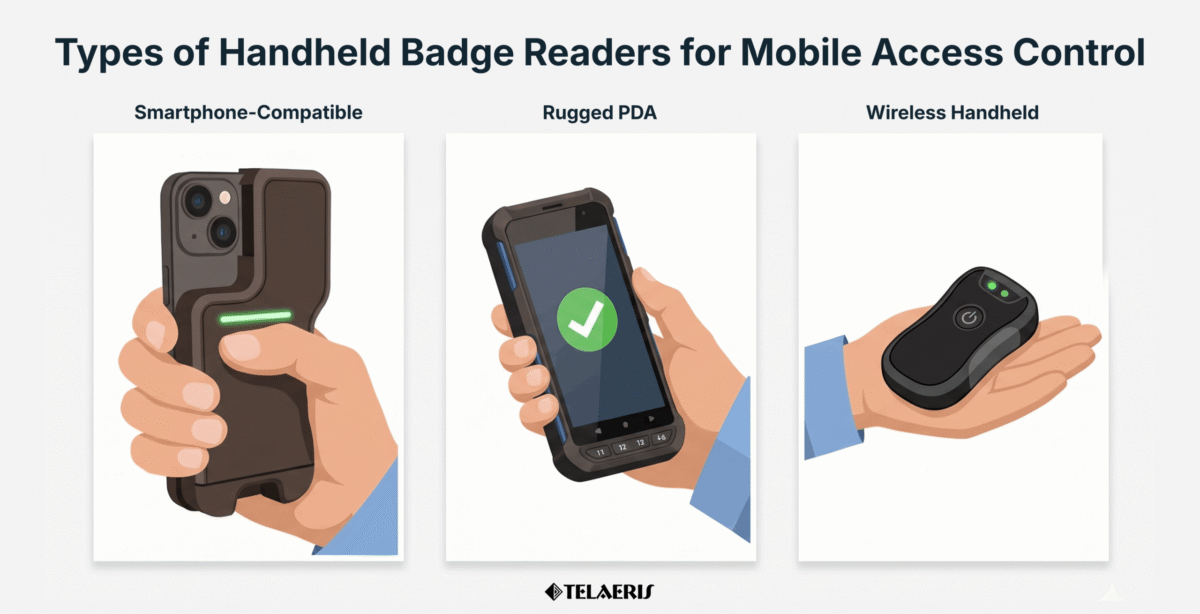
What this blog covers: handheld badge readers capable of reading RFID, NFC, or barcodes/QR codes
What this blog doesn’t cover: Fixed door readers, desktop reader modules, or RFID readers made specifically for inventory/asset tracking.
Handheld badge readers are deployed for a variety of safety and security purposes, including on-the-go access control, identity validation, time and attendance, remote bus entry, construction site access, visitor or event management, and emergency accountability.
Some Important Factors to Consider
These factors may influence the type of hardware the organization needs:
- Which identification technologies need to be read? Proprietary or legacy credentials, prox cards, government PIC or TWIC, mobile credentials, barcodes/QR codes, NFC, facial or fingerprint recognition?
- Is there a need for 2-factor authentication, enabled by biometrics or a physical PIN?
- What environment will the device be used in? This can affect the type of device you need, IP rating, or whether intrinsic safety is required.
- What are the network requirements? Will this be used in a highly secure environment that doesn’t allow camera, microphone, or network access?
- Does the device need to work offline in remote environments, hosted on-prem or in the cloud?
- Will this device be used for multiple purposes, such as emergency mustering and visitor management? A hardware investment should be flexible and capable of handling multiple relevant situations in the field.
Types of Hardware Used for Mobile Access Control
There are a handful of options for mobile access control hardware, including:
- Devices that connect to smartphones
- Standalone readers without screens
- Rugged PDA devices
RFID Readers for Smartphones (BLE or sled readers)
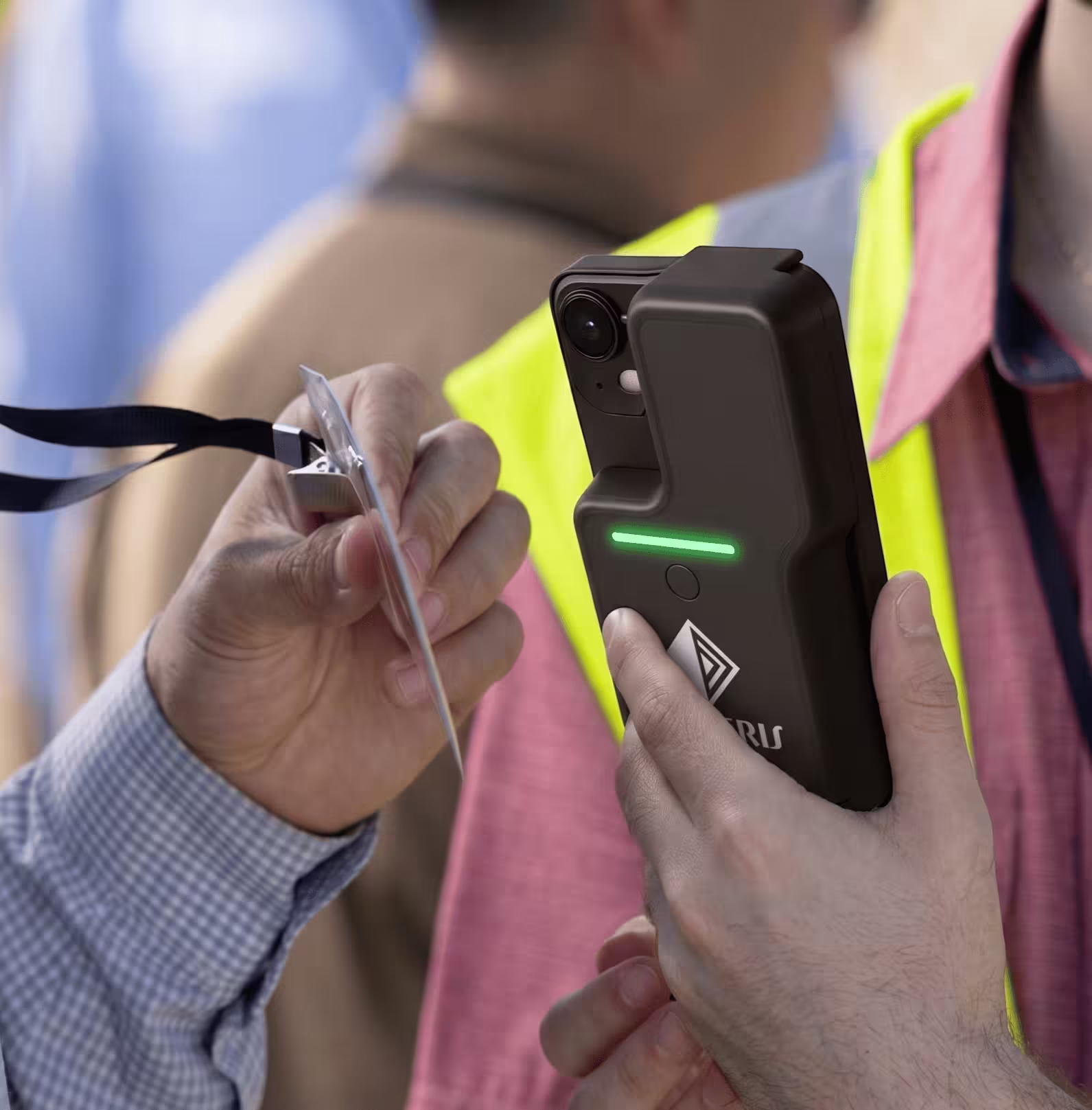
A modular companion reader enables a smartphone or tablet to read RFID badges. This category of readers includes many forms, such as sled devices, clip-ons, plug-in devices, and wireless Bluetooth Low Energy (BLE) readers.
Some brands of plug-in devices include:
- HID OMNIKEY Plug Series
- Grabba readers, which utilize HID’s Omnikey module
- rf IDEAS Wave ID nano
These are affordable and convenient options. One limitation of some options is that the plug may not work with a phone in a thicker case. And sled devices may only be compatible with certain smartphone models.
Some organizations have even plugged a desktop reader, such as this Elatec reader, into a phone to work for mobile badge validation.
BLE badge readers, like the one pictured right, are generally compact and can connect to most Bluetooth-enabled devices.
The benefit of these devices is that they are lower cost and can integrate quickly into small deployments or corporate environments that already provide their own fleet of devices to users. However, low-cost readers may only support one or two card formats (e.g., 125kHz proximity only), which can be a problem if an organization uses multiple badge types.
It is also possible to use a smartphone’s NFC reading capabilities on its own, but most companies avoid this method because it is insecure.
If access control integration is a must-have, that is, being able to pull or push access permissions and badge data from an existing system, this full functionality is not be offered by hardware-only vendors. Connecting the reader to an access control system requires a custom-built application or software platform, such as XPressEntry, that handles PACS integration.
Finally, these devices are ideal for use in corporate offices, guard shacks, or non-rugged outdoor environments. They are generally not as ideal for rougher workplaces.
Wireless Handheld Readers with No Screen
These simple wireless handheld devices read a credential and indicate pass or fail with a red or green light. They generally have only a power button and no screen, and no information is contained on the reader. Some models may have one or more function buttons to change modes or enter a pin for two-factor authentication. Similar to a wall-mounted reader, but in the palm of your hand.
Cypress is a notable vendors for the no-screen wireless reader. This Schlage Portable reader also fits into this category and is something Telaeris actually deployed over a decade ago.
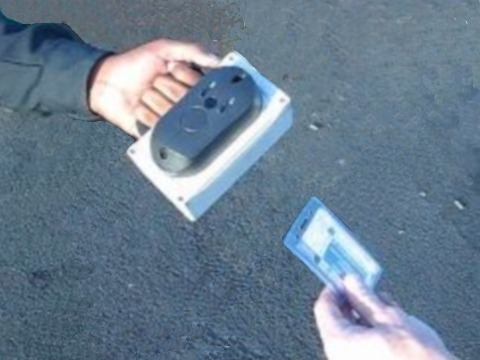
Most models require additional hardware to be installed directly on the access panel. This extra hardware integrates with OSDP or Weigend to process badge validation from the panel.
Since there is no screen, the user cannot view a badgeholder’s name, photo, badge scan history, or other details directly on the device, making these devices less suitable for environments that require visual or manual ID verification. However, they are easy for security integrators to install.
Rugged PDA or Tablet Readers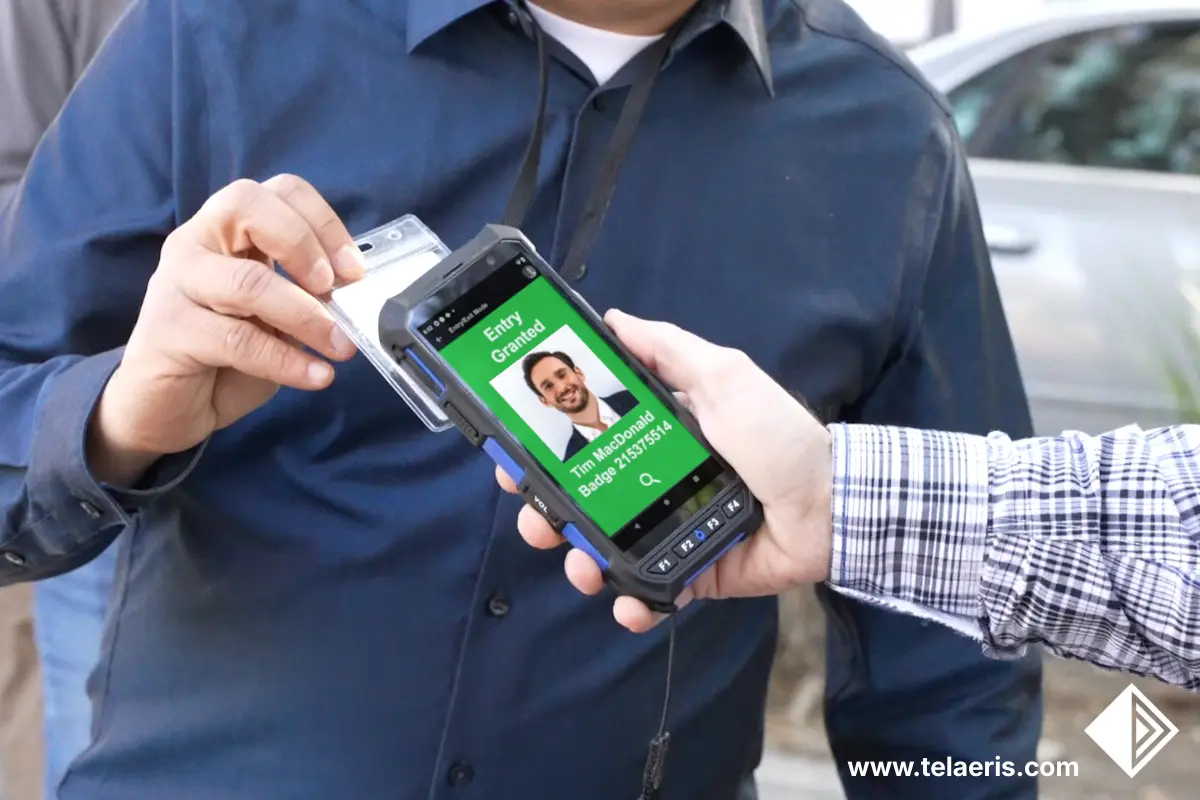
At the advanced end of the spectrum are purpose-built PDAs/tablets. Rugged handheld devices are built and IP-rated for industrial security environments to withstand dust and rain in the field. For high-risk industries, intrinsically safe (IS) certified options are available, designed to operate safely in environments with flammable gases or dust.
This category is the most versatile and appropriate for enterprise deployments where hardware reliability, user experience, and multi-use functionality are priorities. If a guard is using devices inappropriately, device management (MDM) tools exist to lock functionalities and keep devices from being misused.
These devices cost more than other options but offer the most customization and the widest range of functionality. Software integrations with access control systems support back-and-forth data flow between systems, ensuring that cardholder data, permissions, and activities are logged and current.
The software platform on a handheld PDA reader may also support a wide range of use cases from a single interface, including
- badge validation
- entry and exit tracking
- emergency mustering
- canteen management
- parking lot and bus entry
- remote gate access
- confined space management
- biometric validation (fingerprint/facial recognition)
- guard tour
- events and training management/access
- time and attendance
- temporary site access
Having one device that handles all these security needs can boost efficiency and operational control. A system like Telaeris’ XPressEntry supports all these features and integrates with over 40 access control systems, including LenelS2 Onguard, Genetec Synergis, Honeywell Prowatch, and more. The XPID210 handheld reader is a rugged PDA that runs this software and can read any badge or credential type.
Final Considerations
It is surprisingly difficult to verify that your badge can be read by a mobile reader. With multiple frequencies, encodings, cryptography, and other security features built into a badge, the first thing you need to do is verify that your credential can be read and decoded correctly.
If you need to work with data inside your physical access control system (PACS), make sure your vendor has an integration that stays up to date. Having to manually update a CSV from your PACS is time-consuming and doesn’t include recent changes.
And lastly – make sure your vendor is strong on the support side. Systems fail more often because companies don’t follow through on their promised deliveries. Test out the product and make sure it meets your needs and expectations.
Telaeris’ XPressEntry system has served customers reliably for over 20 years and has adapted over the years in response to real experiences in the field. With rugged PDA’s, tablets, kiosks, and a smartphone BLE reader coming soon, we have the hardware and software for just about any use case supporting mobile access control, evacuation accountability, badge validation, and now guard tour. To learn how XPressEntry supports mobile security across these use cases, contact our team at 858-627-9700 or [email protected].