
A breakdown of what a guard tour is and what makes an effective system for tracking security patrols and incidents.
What is a Guard Tour System?
A guard tour system tracks and verifies that security guards complete assigned patrol routes. A typical guard tour system consists of physical checkpoints placed throughout a facility and a method for guards to log their visits and inspections at each location. The best system should give security managers visibility into when patrols are completed, notify them of incidents, and ensure accountability across their team.
A guard tour in its simplest form might be a notepad where a guard jots down locations, times, and observations along their route. However, paper systems are notably unreliable and offer no way to know what’s happening in the field in real time.
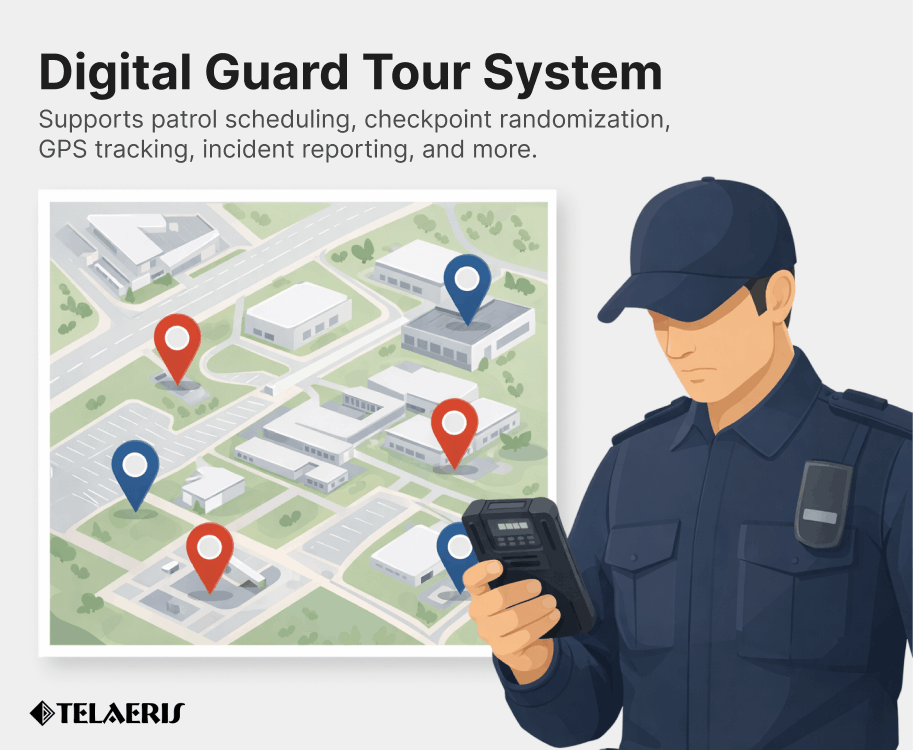
Software-based guard tour systems provide security teams with better patrol tracking and documentation capabilities. Digital or app-based guard tour systems rely on hardware devices such as smartphones and scanners.
Comprehensive systems can include features such as:
- Patrol scheduling
- Notifications
- GPS tracking
- Incident reporting
- Security System Integrations
Choosing the right system depends on an operation’s size, layout, network requirements, potential risks, and security needs.
Reasons to Implement a Guard Tour System
Accountability
Guard tour systems create a history of patrol activity, keeping individuals accountable and ensuring patrols are completed as scheduled. Each checkpoint interaction is recorded with a timestamp, providing a clear record that duties were performed.
This benefits multiple stakeholders:
- Guards have proof that they’re doing their jobs
- Security supervisors have a clear view of their workforce
- Clients get better visibility into the security coverage at their facilities, strengthening confidence and trust
Awareness
Good patrol systems should not just track a guard’s movement from checkpoint A to B, but provide better situational awareness over every patrol. When something goes wrong in the field, guards should be able to swiftly record incidents, and the system should send immediate notifications to the correct people. This lets security teams respond faster to risks. Additionally, patrol incident data can help security teams identify patterns and recurring issues.
Liability
The guard tour incident report and paper trail can also serve as proof of compliance or to support insurance claims. If damage occurs or a security concern is raised, documentation and a timeline of patrol activity should be readily available. This may help reduce investigation time and eliminate uncertainty.
Types of Security Guard Tour Systems
Guard Tour History: Early Systems
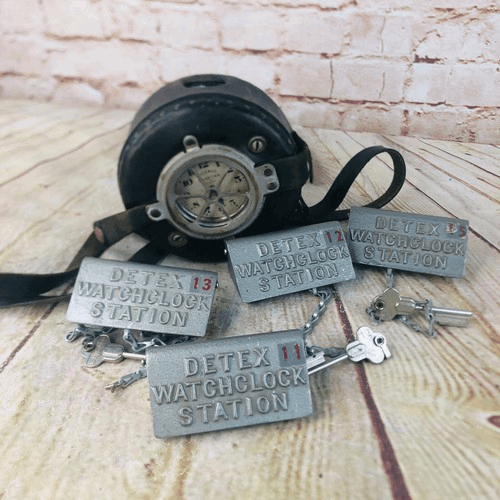
Security guards used “Watchman’s clocks”, pictured right, as early as the 1920’s to document their rounds. The checkpoints were metal keys that got inserted into a heavy mechanical clock worn on a leather strap. The key would make an impression on a round paper disc inside the clock, marking a physical timestamp. A security supervisor would collect and change out the paper disc daily.
The major manufacturer of this legacy clock tool discontinued the product in 2011.
Reinventing the Clock: Modern Guard Tour Systems
Evolving from the watchman’s clock, the first digital guard tour appeared sometime in the 1980’s in the form of wand-based systems (also known as stick, pipe, or button systems). Still in use today, these systems require a guard to touch a device to metal checkpoint buttons. The device records a timestamp at each button touch, and that data downloads to a computer when the guard docks the device. Some systems also offer a way to record incidents with pre-configured booklet of buttons held by the guard. Wand systems are effective for basic checkpoint logging, but the downside is that there is no real-time visibility into the tour.
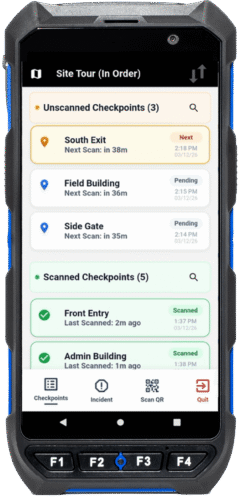
App-based systems afford more capabilities that enhance patrol tracking and increase operational awareness. Smartphone apps lower the barrier to entry considerably. Guards use a phone to scan QR codes, log incidents, and receive route assignments. These systems are portable and fairly easy to use, and there are plenty of options to choose from.
Software guard tour systems are great for security teams that want to document incidents in the field, track GPS locations, or view historical reports. An electronic guard tour system may include:
- Mobile applications on a smartphone or handheld device
- QR code, RFID, or NFC scanning
- Real-time monitoring and incident reports
Checkpoint Technology: QR Code, NFC, or RFID?
Checkpoints will most likely be mounted to walls, doors, fences, or other easily accessible places around the facility. Checkpoints should last long and be easy to use but hard to “hack” or duplicate, to avoid diminishing the system’s integrity.
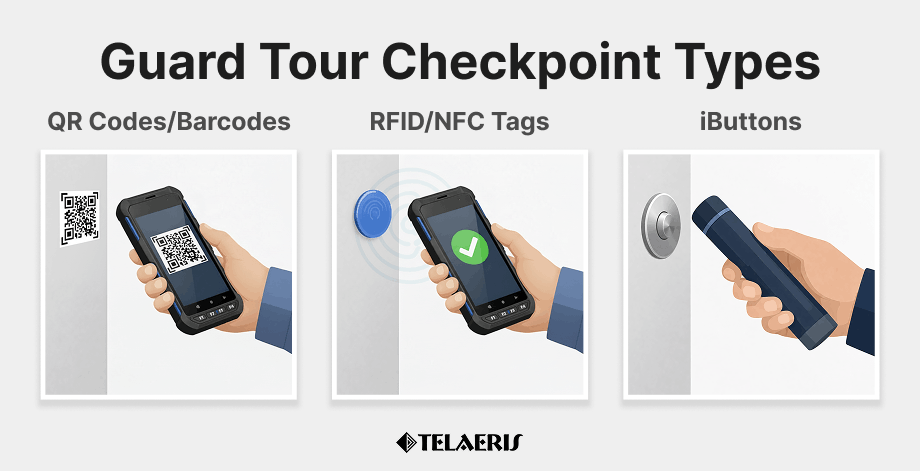
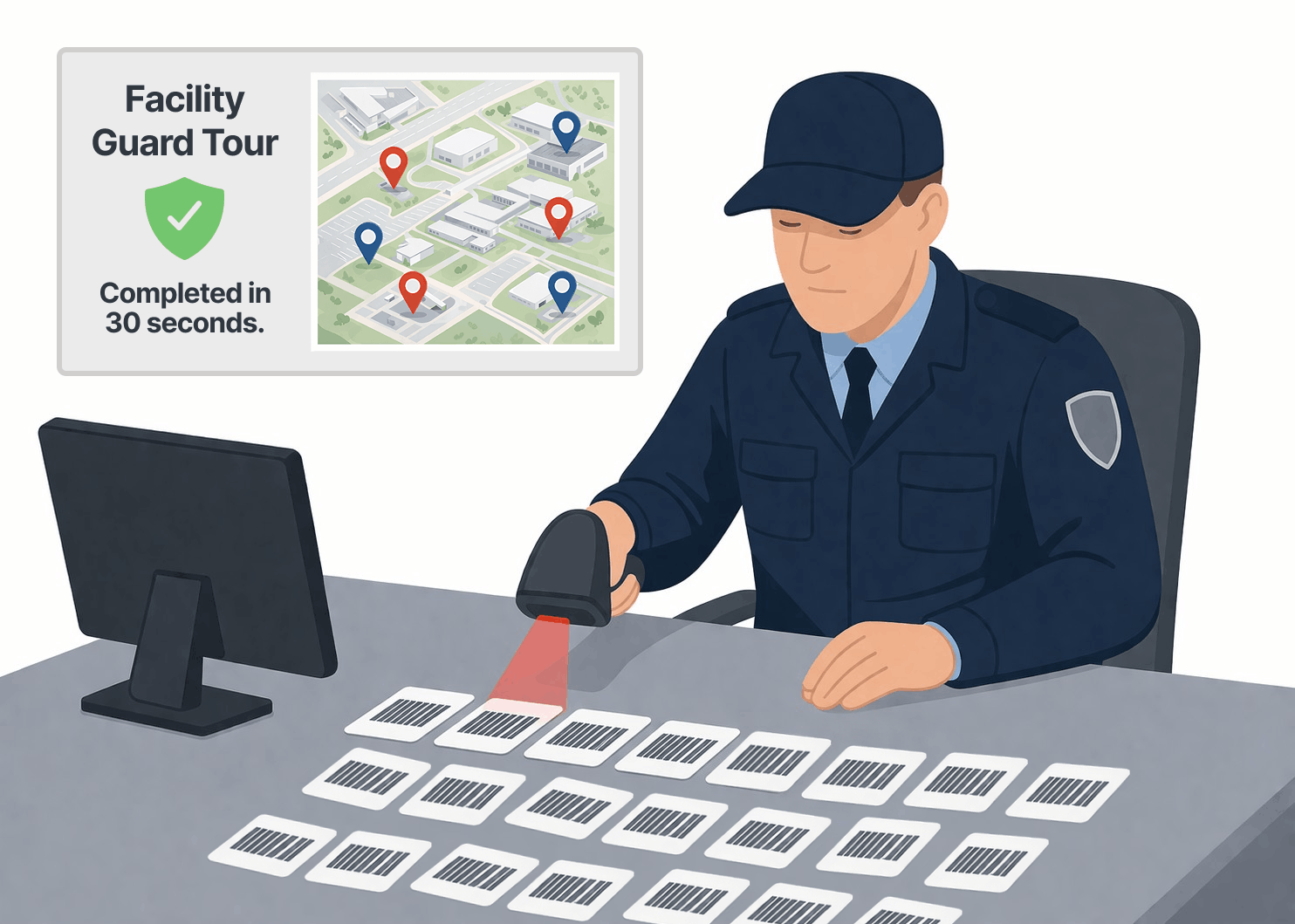
QR codes and barcodes are low-cost, easy to deploy, and compatible with most smartphone cameras. However, they can lack durability and longevity, especially in outdoor environments. Barcode stickers or labels can also be easily tampered with or removed. Perhaps an old guard’s tale, but the ability to rip a barcode sticker off a wall or door could allow a tour of a facility to be completed from a desk in just a few seconds.
NFC or RFID tags offer greater longevity and security than QR codes or barcodes. They are durable, weather-resistant, and compatible with most devices with scanning software or reader attachments. Certain tags can be configured to be highly secure and resistant to hacking. NFC or RFID tags can also be concealed inside an inconspicuous housing for discreet patrols.
Choosing between RFID/NFC and Barcode/QR Codes depends on security needs, the environment, and, of course, what the guard tour system software supports.
Note: Wand or stick use iButtons as checkpoints, consisting of a computer chip inside a metal casing. These may seem similar to RFID, but they are not the same. iButtons require physical contact to log the guard’s presence. If an organization is planning to upgrade from this type of system to an app-based software, keep in mind that iButtons are not compatible with RFID or NFC readers, and expect to replace existing checkpoints.
Choosing the Right Digital Guard Tour System
Along with the checkpoint technology, here are some other things to consider when choosing a digital guard tour solution:
What are the organization’s patrol tracking goals?
Awareness? Compliance? Anomaly detection? Ensuring the system’s capabilities meet the requirements can help clarify which kind of system to invest in. Pipe and wand systems are simple and budget-friendly, but may not fill the operational gaps of an enterprise security operation.
Where is the Guard Tour located?
Large campuses or security teams may require a system with GPS tracking or robust incident reporting. Offshore or remote locations might need a system that can work offline or with limited network capabilities. Hazardous environments might require intrinsically safe devices.
Can you leverage existing devices for guard tour?
Many software guard tour systems are app-based and can be installed on smartphones, tablets, or rugged PDAs. If there is concern about guards using devices for anything other than guard tours, consider using an MDM or a Secure Device Management tool that locks the device to the guard tour app.
XPressEntry Guard Tour
Telaeris’ XPressEntry Guard Tour is an app-based solution designed as a part of a unified security operations platform. Physical security teams already trust XPressEntry handheld badge readers for access control, mobile identity validation, and emergency evacuation accountability. Telaeris built patrol-tracking functionality in XPressEntry to work alongside existing security operations, enabling security guards do more with one reliable system.
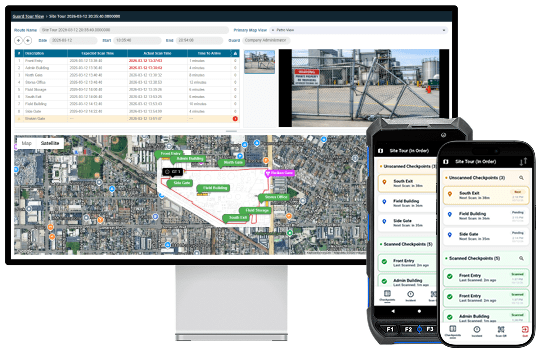
XPressEntry Guard Tour features
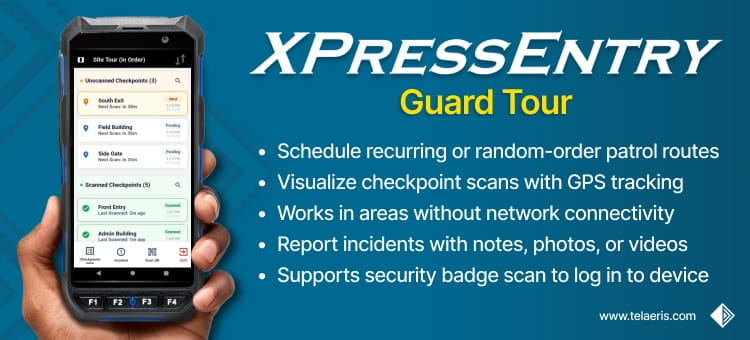
- Supports any QR codes, barcodes, NFC, or RFID. Leverage existing technology to avoid rip-and-replace costs or talk with Telaeris’ RFID experts to develop a secure checkpoint solution.
- Real-time GPS tracking provides live map views of active patrols on both handheld devices and management dashboards.
- Customizable tour management lets management easily define routes, schedules, time requirements, and automated alerts.
- Comprehensive incident reporting in XPressEntry allows guards to capture notes, images, and video directly from the field. Additionally, patrol alerts and notifications let supervisors monitor tour status in real time, leading to improved response times to critical situations or distress signals.
- Access Control Integration – Scan a badge to log into the device and begin the patrol. Use existing credentials from access control systems like AMAG, Honeywell, LenelS2, Genetec, Gallagher, and many more. XPressEntry also supports identity verification via badges, mobile credentials, or facial recognition for secure areas that require random spot checking.
Contact Telaeris if XPressEntry Guard Tour sounds like a good fit for your organization’s security needs, or if you are a current customer looking to add guard touring capabilities to an existing deployment.
